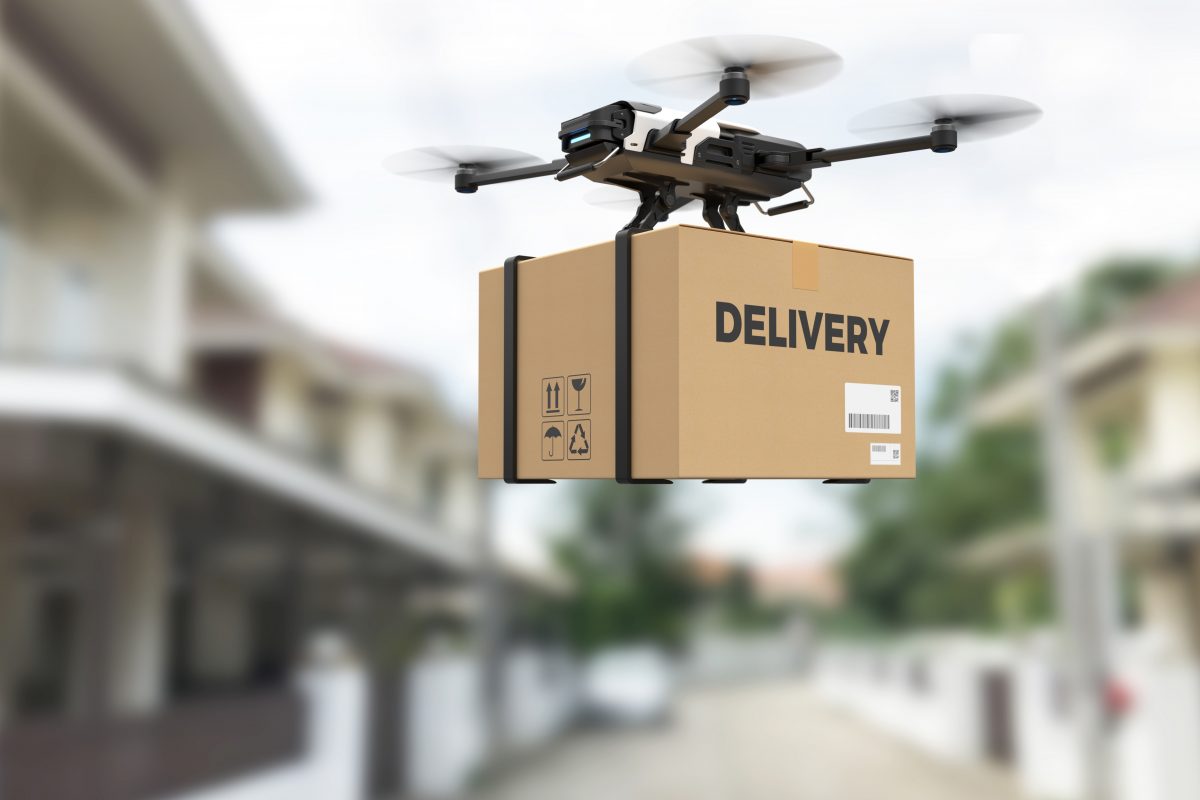
Future of automation in transportation & logistics industry

Like many other industries, the transportation and logistics industry is poised to grow exponentially with the advancements in technologies. As the latest technologies are redefining traditional business models, they must adapt themselves to stay ahead of the competition. According to Mckinsey, many operations will be automated by 2030, as artificial intelligence takes over the many repetitive activities that logistics companies perform. With endless possibilities in machine learning, artificial intelligence, robotics, and IoT, enterprises are looking at automation to streamline logistics on a global scale. 

Factors driving adoption of automation 

High per capita cost of manual labour 

Enterprises may find it challenging to find skilled labour, or they cannot meet the per capita cost for maintaining a large manual labour force. Because of fierce market competition, enterprises must keep their expenses to the minimum to win this race. Also, it is not an ideal solution to hire more labour to meet fluctuating demand and supply. To address this situation, enterprises can leverage automation as the best choice.

Technical advancements

Technological advancements in artificial intelligence, machine learning technologies, and IoT is redefining the entire ecosystem, and transportation & logistics is not spared. From planning until execution, AI will play a vital role such as automated transportation, order prediction, optimizing warehouse locations in line with requirements. However, lack of clarity on which technology will emerge as the winner may create some amount of confusion among the organizations to channelize and prioritize their investment in these technologies. 

How is automation moulding the future of logistics industry?

Automated warehouse

Warehouse automation is one of the first areas companies try to attend when it comes to investing in automation. On a bigger scale, it encapsulates the automation of existing processes to improve efficiency, reliability, enhance accuracy, and leads to improved ROI. Bringing inventory to the order picker to minimize his movements inside the warehouse, automated storage and retrieval systems (AS/RS), automated carrying vehicles, automatic conveyors, etc. are some areas where automation can play a significant role in a warehouse. 

On-demand Automated trucks

Consumers have moved from owning a product to avail its benefits- the sharing economy. Uber and Airbnb are classic examples of how taking away the ownership of privileged customers. Transportation & Logistics industry is also witnessing the same “shared economy” model in the form of on-demand automated trucks. On-demand autonomous trucking improves the efficiency of freight movement and reduces the increased cost of hiring and training drivers. The autonomous truck would work round the clock with double the work done by non-automated trucks. On-demand trucks remove the burden of enormous initial capital investments from the organizations, reduced transportation costs, and ultimately elevate customers with competitive prices. 

Real-time tracking

Consignment delivery has always been a significant concern for enterprises as timely delivery of goods is directly proportional to customer experience. Real-time monitoring can enable logistics providers to address demurrage and detention problems and take corrective measures such as informing the customers about any possible delays due to traffic or bad weather, resulting in reduced failed delivery instances and improved customer satisfaction. 

Automated Analytics Systems 

In this era of “Data is the new Oil,” T&L companies must leverage the power of data analytics to stay ahead of the competition. Those organizations who rely on traditional or outdated IT systems can’t drive insights from available data and hence fails to understand and meet customer preferences and market dynamics. T&L companies are sitting on a vast amount of data which is not explored for generating insights such as customer churn prediction, demand generation analysis, and supply shortage prediction.  Automating the entire system help enterprises to create actionable insights periodically and salespersons can act accordingly. Sales figures can directly be induced back to the system from sales POS, and the system can generate revised insights to best suit the current situation. 

Automation: Gateway to the future

Though Transportation and Logistics companies have been relying on advanced technologies to handle the complex network, they haven’t explored the commercial side of automation yet. When employed correctly, automation can substantially improve organizational efficiency, sales growth, performance, reduce the cost, and most importantly increased revenue. 



Sarabi Tech and StreetGooser announces strategic partnership

Nairobi & BangaloreJul. 20, 2022 – Sarabi Tech and StreetGooser are pleased to announce they have entered into a strategic partnership, combining Sarabi Tech’s cloud computing technology services with StreetGooser’s world class Accommodation Management Software and next-gen technology services.

With technology playing an increasingly critical role in every aspect of business, companies recognize that they need to accelerate the development of digital solutions to ensure they remain on the competitive vanguard.

The SarabiStreetGooser partnership brings together deep skills in business and technology strategy, cloud computing, technology development and deployment, and organizational change management to help support clients through successful transformations. 

“The Sarabi-StreetGooser partnership is a powerful combination. StreetGooser’s understanding of complex digital product interactions, its deep engineering expertise, and Agile, collaborative approach is uniquely complimentary to how the Sarabi team works. We believe this helps to generate industry leading technology products and platforms,” said Peter Mukulu, Sarabi Tech Company’s founder and Chief Executive Officer. “With 14 sales offices across Africa, along with close-to-client locations in East Africa, West Africa and South Africa and the added capabilities of over 50 StreetGooser employees, this partnership will allow us to drive far more business impact for our clients.”

“Partnering with Sarabi Tech to deliver transformation for our clients will allow us to provide the very best business, travel technology solutions on which we’ll conceive, design, and build the next generation of transformative enterprise and digital products and platforms,” said John Varghese, StreetGooser CEO. “Together, working as one team, we will unlock the full potential of digital transformations and place our clients on the best path for success in the new digital business landscape.”

Additionally, StreetGooser will become part of the Sarabi Alliance Ecosystem, a network of partnerships that provides proprietary access to tools, technologies, and delivery capabilities that help Sarabi teams deliver breakthrough client results.

By virtually connecting Sarabi Tech’s more than 20 consultants with StreetGooser’s deep next-gen technology and engineering expertise, the collaboration represents a step-change in the way both businesses address the needs of the market.

Must-have features in a good eCommerce website

As part of the new normal in this pandemic-struck world we inhabit, almost every business has seen disruptions in its operations. Consumers have quickly adapted to the changes however, as almost overnight, people began to switch to online shopping for their everyday needs. Research shows that 52% of online shoppers won’t ever go back to grocery shopping in-store, and 58% of consumers expect to order more online in the coming months.

It makes sense, now more than ever, for small brick and mortar store owners to think of meeting customer expectations and shifting their businesses online. Having a website for their business has become an indispensable aspect in ensuring that it survives, and possibly even thrives, in these unusual times. But when one is faced with the daunting task of creating a whole website from scratch, it is quite normal to feel a little lost. 

Small-business owners looking to start selling online who don’t have the experience or expertise required to go digital shouldn’t let those minor inconveniences stop them! For those confused about what features need to go on an eCommerce site, this list of necessary elements is the right place for clarity before approaching a trusted IT partner who can help them go digital with ease.

Here are some features that are necessary while creating an eCommerce platform for businesses:

Content

A visitor needs to be able to find all the information regarding the business with ease within the website – pages like About Us, FAQs and Contact Us are especially crucial, as they provide the visitor with the necessary information about what the business does, and how they can get in touch offline. Quality content is a virtual salesperson – it can provide all information a customer needs to know about the product, about the company, and many other details effectively & efficiently. The content should be easy to understand, easy to locate, and relatable to your target audience depending on their gender, age, geographic location, native language, etc. 

 Searchability

Ecommerce websites need to provide a seamless experience to their visitors by allowing them to search for products with ease.  The visitor needs to be able to easily find what they came to the site looking for, and shouldn’t face any obstacles before they do. The ‘Search’ feature in an eCommerce website is very crucial as research shows that 30 percent of site visitors will use the search functionality, and can generate around 30-60 percent of ALL revenues in a website.  

Product Suggestions

Using an effective analytics mechanism, the website should be able to understand customers’ persona based on their browsing history and suggest relevant alternatives and related items to the one they are viewing. This will heavily contribute to improved customer experience and an increase in revenue for the business.

User Reviews

Giving customers the option to leave their feedback increases the credibility of a brand, attracting more people to the site, and consequently gaining more buyers. Therefore, the provision for User Reviews, while optional, is a definite good-to-have.  A study published by Spiegel Research Centre indicates that 95% of shoppers read comments online before making a purchase. This goes to prove the human tendency to believe word-of-mouth marketing over any claims made in an advertisement. User reviews are valuable, and will often turn out to be the best marketing collateral one could hope for.

Wishlist Option

According to the Baymard Institute, the average documented online shopping cart abandonment rate is 69.57%. The reasons for people abandoning items in their shopping carts could be many – they might feel like they don’t have the budget at the moment, or are expecting a sale to come by, or they might have just changed their minds. One way to cater to each of these customers is to have a “Wish-listing” feature. Wish-listing gives customers the option to save the products they want to buy, but aren’t buying immediately, in an easily findable location within the website. 

Order Management

The website should provide an option for customers to view, modify, or cancel the products they buy. Providing a means to perform these actions without having to take the issue offline enhances a customer’s shopping experience.

Shipping options

Customers should be able to ship a product that they bought to a convenient address and should also have the option to choose their preferred delivery time. Business owners can put thought into whether it would be feasible for them to offer free shipping, which a vast majority of visitors will appreciate. Alternatively, they can charge real-time carrier rates – integrate their shipping options with a real-time carrier’s website to generate their rates and delivery times. They can also choose to charge a flat shipping fee, if their website offers products which are of comparable prices and weights. Even though it might seem hard, it is possible to keep shipping rates competitive without it eating too much into profit margins. 

Multiple Payment Options

eCommerce customers should be able to easily and securely make payments with their preferred payment method – it is necessary to include a variety of features here, as certain people prefer credit cards, others may prefer debit cards and some others might even expect a Cash On Delivery option. This means it is imperative to have flexible payment models available on the website, based on varying customer preferences.


Profile Management 

According to a survey, over one in five customers may abandon the cart if they need to create a username and password before buying something.  Hence customers should be given the option to shop as both a

  1. Logged in user and
  2. Guest user

Superior Vendor Management 

An eCommerce website with a wide range of products will grab more customers, and this can be accomplished by associating with other sellers who can supply a variety of products that complement their own. A collaborative approach to vendor management or a seamless vendor partnership option is something they need to strategize if they want to survive, together. If this is something they’re aiming to do with the website they build, a vendor management system should be in place too.

While we won’t see brick and mortar stores going away anytime soon, choosing not to go digital is not an option for businesses of the future. Businesses need to explore different avenues like providing in-store pickups of online orders, and evolving hybrid business models that involve retaining both physical and online stores to continue surviving in a post-pandemic-stricken world.  Today it is pretty easy, low risk, and low cost to build an eCommerce website. If you’re a small-business owner looking to build an eCommerce website, you can speak to one of our expert consultants who will guide you through the process step by step. Drop us a mail at digitize@sarabi.tech


Redefining the real estate landscape: Proptech

Accelerated adoption and advancements in the latest technologies have disrupted the way organizations across industries do business. However, unlike retail, healthcare, or transportation, the real-estate sector has been considered a laggard in technology adoption. According to the latest report, Emerging Trends in Real Estate by PwC, COVID-19 has accelerated change in the real estate industry, focusing on social justice and safety, and wellness amid a backdrop of economic uncertainty. Real estate industry players invest and adopt accelerated digital transformation to stay ahead of the competition and ensure business resilience in a technology-dominated future market. Proptech is gaining momentum and is redefining the traditional way of buying, selling, renting, and investing in real estate.    

What is Proptech?  

Proptech refers to the practice of incorporating technology into the real estate industry. Proptech players are committed to creating efficient & customized digital solutions for real estate developers, investors, insurance providers, brokers, and property management companies. This cross-industry technology collaboration is set to change the way people research, rent, buy, sell, manage, and invest in real estate.  

Image Source: Proptech Capital

Here is a list of Proptech technologies redefining the real estate industry: 

Artificial Intelligence & Machine Learning  

AI and machine learning-enabled platforms allow enterprises to make insightful decisions. Processing a huge amount of available data enables companies to personalize and offer properties based on individual customer preferences, personality traits, and values, rather than just geographic location or size. It can also analyze and predict any safety hazard or construction defects, saving time and money. It also helps enterprises foresee future competition concerning any geography by evaluating the probability of occurrence of relevant events such as changes in the demographic pattern of the micro-market, income distribution of individuals in the vicinity, project viability in the future. Furthermore, correctly trained and designed Artificial Intelligence & Machine Learning algorithms are helpful to determine the property valuation and help predict the pricing trends more precisely.  

Augmented Reality and Virtual Reality  

The digital era has changed customer behaviour – people now search online before making any purchase. Potential real estate buyers are no exception. Augmented Reality and Virtual Reality technologies open a new arena for real estate providers to make the buying experience more exciting and accessible. Maintaining a demo project has been a pain for real estate developers, costing them time and money. AR/VR enables them to create and conduct virtual tours of properties for their potential customers, which will allow them to experience the final product even before construction begins from the comfort of their own homes. This will also benefit long-distance customers who can’t physically visit the project. Real estate providers can use virtual tours that detail various parameters of the property, such as temperature control, safety precautions, community guidelines and help them get acquainted with the property well in advance. Virtual tours can also provide a realistic view of the project to the prospective customer. Their expectations are set before project initiation and can help deliver the final project by meeting the customer’s expectations.  

Robotic Process Automation  

Real estate and property management involve multiple documents that are data-heavy & rules-based, which reduces the productivity of employees and the business. Real estate companies can now bank on robotic process automation to automate these rule-based tasks and enable valuable human resources to focus on business-critical functions. Real estate operations such as tenant onboarding, portfolio management, payment reminders, NAV calculations, KYC compliances, maintenance scheduling, work orders, listing management, rent management, etc., can be automated leveraging RPA. Focusing on business-critical functions, such as interacting directly with potential buyers and sellers, enhances the probability of more closed deals, resulting in positive revenue growth. RPA improves transparency and visibility into various business processes, thus enabling realtors faster and wiser property management.  

Internet of Things (IoT)  

The Internet of Things (IoT) is helping the real estate industry grow and manage businesses more efficiently than ever before. IoT devices can send alerts and notifications to tenants or property managers in case of a safety hazard or other emergency issues. They can also keep track of maintenance history, identify potential problems and allow for predictive maintenance. IoT devices can also help property managers understand tenant behaviour and preferences to improve properties and provide a superior customer experience. Before making a purchase, any prospective customer or tenant can evaluate the property’s history on maintenance, electric works, plumping, fire incidents, etc., through its connected IoT devices. Processing the immense variety of data available from IoT sensors through advanced analytics poses the enormous potential to offer meaningful & valuable insights that will change the way real estate works.  

The Future of Proptech  

The Proptech ecosystem is rising and will undoubtedly continue to grow, with budding start-ups becoming larger, global enterprises. Proptech will redefine the real estate industry, just like FinTech transformed financial services and InsurTech transformed insurance services. For real estate organizations to thrive and prosper in the increasingly digitalized future, understanding and effectively utilizing Proptech solutions is the way ahead.   


Technology revolutionizing e-learning platforms

According to UNESCO nearly 1.5 billion children and youth are out of school post the COVID-19 outbreak across 165 countries. With most offices having moved to work-from-home options and the ever-increasing unemployment rates, the online learning rate is going to grow exponentially among the working class too. With the COVID-19 threat still looming, there is still uncertainty regarding when schools and offices will reopen at full capacity again. The obvious inference from this is that E-learning platforms are going to see a sharp increase in their utility and user base in the near future.

E-learning platforms have been around for many decades, but haven’t been able to create the kind of ‘transformational’ impact that has long been promised. With the Coronavirus ‘black swan’ event, all of these remote learning platforms have gotten a sudden push into the mainstream, even in places where people could not envision such options earlier due to poor infrastructure and other socio-economic issues. 

The size of the E-learning market had already been pegged to cross USD 240 Billion by 2023, and now this projection is going to go up further. It is no wonder then, that in the coming days we will see newer companies entering the remote learning race utilizing emerging technologies like Artificial Intelligence, Big Data Analytics, Cloud Computing & Augmented and Virtual Reality to compete with established market leaders.  

Emerging technologies that are set to take e-learning solutions to the next level

Artificial Intelligence

According to Forbes, “Artificial intelligence can act as a virtual tutor and answer questions on the fly”.

Artificial Intelligence-powered E-learning platforms will be equipped to identify and assess learners’ levels of understanding and suggest customized paths of learning. Content analytics powered by AI makes personalized and learner-centered approaches possible – these would be based on the learner’s intellectual level, from kindergarten through higher education to even corporate training. Developing these solutions is no longer a daunting task with the advent of AIaaS or “AI as a Service” – now these solutions are easy to implement and come with enticing benefits. 

Augmented Reality (AR)

AR solutions bring more engagement, excitement, and innovation to e-learning platforms making content more consumable, enjoyable, and valuable. Augmented Reality techniques will be widely utilized to increase engagement for learners through activities, rather than the traditional read and write learning methodology. Augmented reality can also be used to offer customized learning options to suit differently-abled students with special needs to learn better, as AR includes gesture, voice recognition, and image rendering experiences.

Virtual and Remote Laboratories

Laboratories are some of the best places to learn – they allow students to acquire knowledge, experiment with different methods of arriving at answers, and experience real equipment, inculcating active learning and the development of skills based on solving challenges. Simulating labs virtually makes it possible for the users to stay connected through the internet to a remote physical system, and conduct web-based technical experiments. Students can extend their depth of knowledge in areas of control systems, programming, database, various other web-based applications, tools, and technologies. 

Virtual labs are also extremely beneficial to run experiments that are normally too expensive, unsafe to run, or unavailable.  They also allow students to repeat an experiment multiple times, giving them the opportunity to see how changed parameters and settings affect the outcome without wasting resources.

The Internet of Things

The number of devices that will be a part of the Internet of Things (IoT) by 2025 will be around 75 billion in number. The rise in IoT is going to further improve the e-learning experience. Already we see how mobile learning allows learners to access E-learning courses with absolute freedom of time and place. In the future, we are going to see more content in the form of images and videos.  24X7 access to the internet across a number of wearables will make teachers redesign assessment from “remembering and writing down”, to “evaluate and elucidate concepts on the go”.

If you’re thinking of using these technologies to your advantage to build or improve your E-learning systems and solutions, reach out to the expert technology consultants at Sarabi Tech. Sarabi has built spectacular EduTech platforms for organizations across the globe – with our years of experience and know-how in the latest technologies such as AI and AR/VR, Experion is certain to deliver the best solution with minimum time investment.