
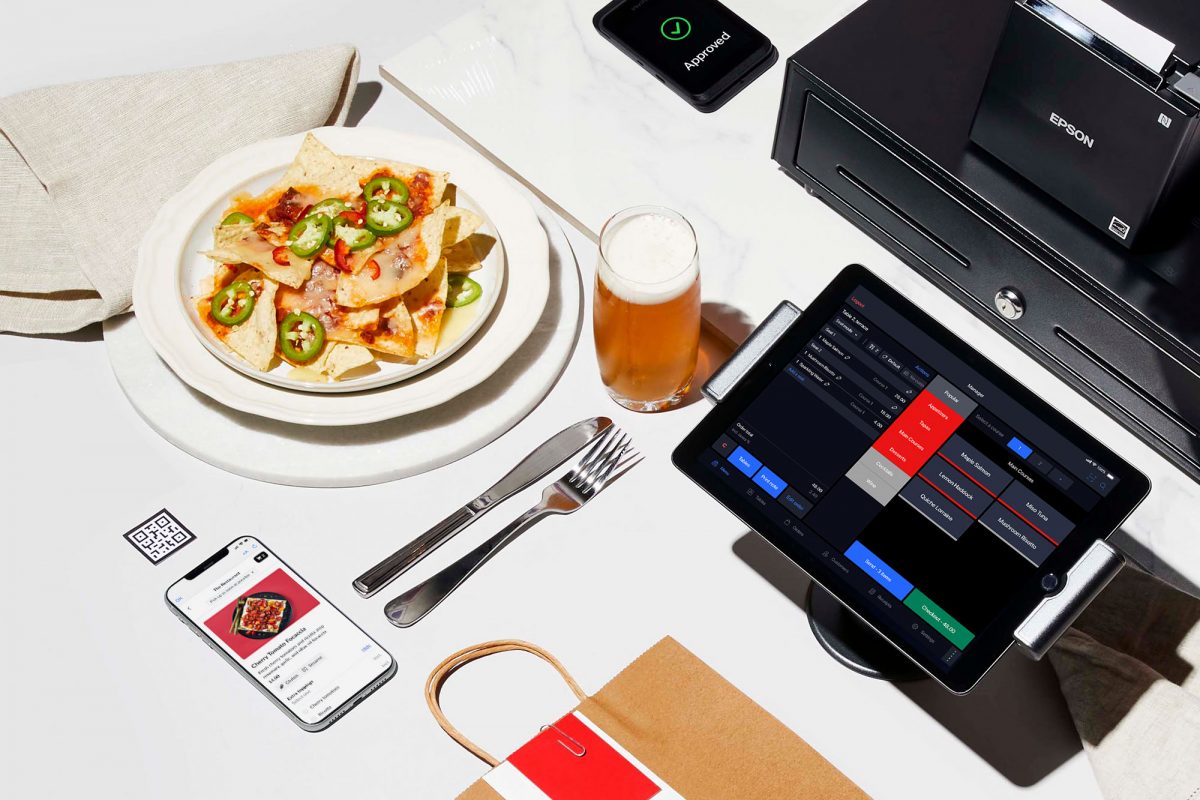
The next time you leave your house, take a look around you. Wherever you are, and whoever you’re with, there is sure to be one commonality observed – the presence of a mobile device. Mobile technology and the digital age have long since descended upon our daily experience and, in many ways, completely transformed how we engage with the world both professionally and personally.
Mobile devices are the 24/7 hub of information, digital connection, and self-service convenience. It is what we use to call or text our loved ones, answer emails on the go, engage on social media, get answers to burning questions, capture memorable moments and growth opportunities.
It should come as no surprise that mobile is transforming the travel and hospitality industry as we know it, both from an external perspective (guest-facing) and an internal perspective (end-to-end operations). Mobile, cloud-based technology plays an integral role for today’s hoteliers, empowering them to meet the guest demand for convenience and personalization while delivering enhanced data capture, increased automation, seamless connectivity, and more. The saturation of mobile also means that guests — and staff — expect easy-to-use interfaces and seamless cross-device experiences.
According to a recent travel trends report, 88% of hotel guests wish to have a mobile application that can deliver them a personalized experience. Furthermore, 70% of millennials are likely to book holiday accommodations using a tech amenity like mobile payments, Smart TVs, or keyless entry. From an operational perspective, digital transformation is predicted to play a significant role in business growth across sectors like hospitality in the next decade.
Deloitte reports that the implementation of digital technologies can help accelerate progress towards enterprise goals such as financial returns, workforce diversity, and environmental targets by 22%. Surveys with top executives also reveal that digital transformation’s top benefits include improvement of operational efficiency (40%), faster time to market (36%), and meeting customer expectations (35%).
In this way, mobile technology isn’t just a part of the future of hospitality – it is the future of hospitality.
Hotel Guests Crave a Mobile Experience, Including Apps
Consider this: Hotel mobile applications help approximately 70% of travelers make booking decisions, and about 74% of travelers say they would prefer using a hotel application for booking and other details. Moreover, 62% of guests would be likely or very likely to check-in to a hotel via an app, 77% would like to request room service and other hotel facilities through the use of their mobile, and hotels that offer a mobile app see an 18% increase in room service orders.
Finally, there are currently 5.22 billion unique mobile phone users around the world (two-thirds of the entire worldwide population), and research reveals that 76% of consumers make purchase decisions on mobile devices because it “saves them time.”
Believe it or not, this is still only the tip of the iceberg. The mobile revolution is already well underway. The use of mobile apps within hotels creates an environment in which high-touch, traditional service is effectively paired with seamless, digital convenience. One service model does not replace the other; instead, they work in a lock-step to ensure guest service is continuously delivered according to brand standards, no matter the size or scale of the property. Those guests who prefer an in-person service exchange will benefit from enhanced staff engagement and quick response times. In contrast, those guests that prefer the instant gratification and autonomy provided by a mobile app will readily embrace a digital self-service experience.
Mobile apps offer a wealth of opportunity for hotels – they can act as a digital room key, a thermostat or entertainment hub, a marketing medium, a portal of information (social media accounts, loyalty rewards, 24/7 mobile concierge assistance, local information, amenity details, etc.) a means to check-in and out of the hotel, a booking system for amenities, upgrades, and experiences, and so much more. The flexibility, accessibility, and convenience offered by mobile apps can not only improve guests’ on-property experience but establish new opportunities for engagement and guest connection that contribute to enhanced guest loyalty.
This is especially important when we look to the post-pandemic landscape, as the hospitality industry struggles to hire back and retain key talent. While the industry has always grappled with high staff turnover, the impact of the COVID-19 pandemic has exacerbated this skills gap and, as a result, hotel brands must learn to do more with less. In many cases, the only way to effectively meet ever-evolving guest demands – especially on the heels of the pandemic, when enhanced safety protocols and procedures remain the primary focus – is to invest in digital technology that helps to offset operational demand.
To this effect, McKinsey reveals that the most successful organizations that dealt with the pandemic reported a variety of technology-related capabilities. With the help of mobile apps, hoteliers can effectively maximize staff productivity by automating cumbersome tasks that were once left to manual devices. This empowers staff members to redirect their time and energy where it matters most: the guest experience and their continued safety and satisfaction.

Can Hoteliers Effectively Manage Their Property from a Mobile Device?
Perhaps one of the most critical roles mobile technology has played in the hospitality industry is in the long-awaited departure from legacy platforms. In the past, core hospitality platforms such as PMS, CRS, and RMS were not only cumbersome and resistant to continued evolution – but their software often kept users essentially chained to the front desk or back office. Legacy technology simply couldn’t offer the on-the-go, flexible access that is now offered by cloud-based systems, which effectively allow hoteliers to manage operations at any time, from anywhere.
In a sense, these platforms were largely immobile and rigid, despite servicing an industry that runs in a 24/7, guest-centric manner. From a scalability standpoint, these systems also failed to offer easy upgrade or integration opportunities, which consistently create a bottleneck for hoteliers hoping to streamline and scale their operations while building out a more intuitive, future-friendly technology stack.
Specifically, this is where we’ve witnessed the rise of cloud-based microservices architecture. Technology vendors that aim to deliver truly flexible, cost-effective, and future-proof solutions to hotels utilize a collection of loosely coupled, vertically integrated services (applications) to implement business capabilities. In simpler terms, a microservices architecture (made famous by innovation leaders like Amazon) allows hoteliers to “break up” their software into individual components, based on the unique needs of their property, while benefiting from disparate functionality that can be connected via APIs to form the larger application ecosystem.
Moreover, utilizing a microservices framework, hoteliers are better equipped to deal with a high volume of requests while protecting the exchange of sensitive data across various platforms. When they do occur, which is rare, security issues are contained within each component rather than impacting the entire digital ecosystem.
Microservice-based architecture to enable plug-and-play software components is highly customizable – businesses can effectively build the systems they need to run their hotel precisely as they see fit. From revenue management to property management, guest relationship management, reservation management, channel management, and more, the possibilities are, quite literally, limitless. If a hotelier needs it, it can be created and vertically integrated. And yes, as you might have guessed, this can all be managed with ease from a mobile device. An executive from a 1,400-property hotel brand is currently running their entire business from his mobile device, with credit to the microservices architecture offered by APS (Above Property Services). Just as the mobile experience has transformed the guest experience, mobile technology is currently changing the way hoteliers do business – and it shows no signs of slowing down.
The demand for a mobile experience catered to the needs of both guests and staff alike is, quite simply, a demand that cannot be ignored or understated. Any industry that lives and dies at the hand of consumer opinion must remain increasingly agile and innovative in its service approach.
Understandably, hospitality is no exception – if anything, it is the ultimate case study. Hoteliers simply cannot expect to attract and maintain guest approval and loyalty if they remain reliant on legacy technology and resist the mobile revolution that has changed virtually every aspect of our lives. The only way to stay ahead of guest demands and industry trends is to adopt technology that allows you to move quicker than the competition. The flexibility, scalability, and functionality offered by cloud-based, mobile-first technology allows hoteliers to better serve and connect with their guests. At the same time, the convenience and high-touch personalization delivered to guests via mobile platforms and hotel apps is setting the new industry precedent for great service.
Ultimately, mobile-first technology leveraging next-generation infrastructure presents hoteliers with the opportunity to – finally – redefine what it means to be a premier hospitality provider in an increasingly digital and demanding age. In this way, continued mobile innovation is the ultimate catalyst to continued industry growth and evolution and the key to a successful hotel brand both now and in the future.
 Small business owner showing employee new plan on tablet computer