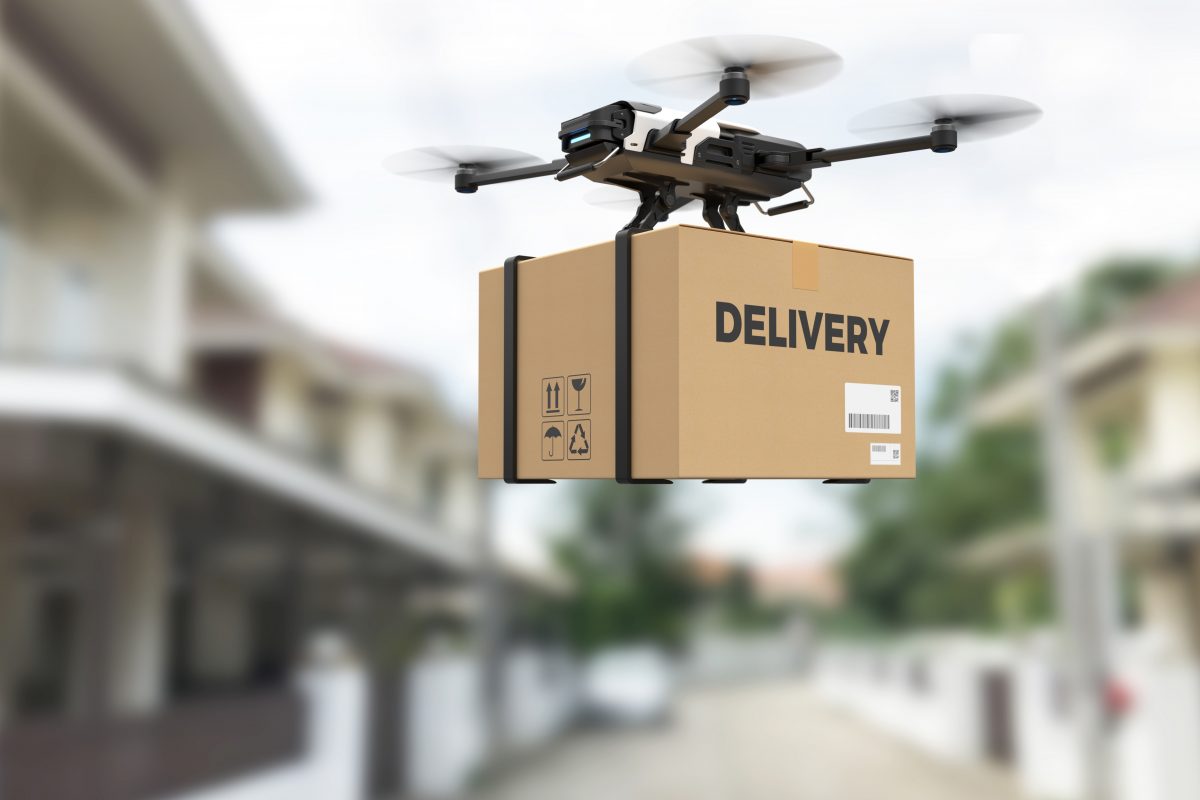
Future of automation in transportation & logistics industry

Like many other industries, the transportation and logistics industry is poised to grow exponentially with the advancements in technologies. As the latest technologies are redefining traditional business models, they must adapt themselves to stay ahead of the competition. According to Mckinsey, many operations will be automated by 2030, as artificial intelligence takes over the many repetitive activities that logistics companies perform. With endless possibilities in machine learning, artificial intelligence, robotics, and IoT, enterprises are looking at automation to streamline logistics on a global scale. 

Factors driving adoption of automation 

High per capita cost of manual labour 

Enterprises may find it challenging to find skilled labour, or they cannot meet the per capita cost for maintaining a large manual labour force. Because of fierce market competition, enterprises must keep their expenses to the minimum to win this race. Also, it is not an ideal solution to hire more labour to meet fluctuating demand and supply. To address this situation, enterprises can leverage automation as the best choice.

Technical advancements

Technological advancements in artificial intelligence, machine learning technologies, and IoT is redefining the entire ecosystem, and transportation & logistics is not spared. From planning until execution, AI will play a vital role such as automated transportation, order prediction, optimizing warehouse locations in line with requirements. However, lack of clarity on which technology will emerge as the winner may create some amount of confusion among the organizations to channelize and prioritize their investment in these technologies. 

How is automation moulding the future of logistics industry?

Automated warehouse

Warehouse automation is one of the first areas companies try to attend when it comes to investing in automation. On a bigger scale, it encapsulates the automation of existing processes to improve efficiency, reliability, enhance accuracy, and leads to improved ROI. Bringing inventory to the order picker to minimize his movements inside the warehouse, automated storage and retrieval systems (AS/RS), automated carrying vehicles, automatic conveyors, etc. are some areas where automation can play a significant role in a warehouse. 

On-demand Automated trucks

Consumers have moved from owning a product to avail its benefits- the sharing economy. Uber and Airbnb are classic examples of how taking away the ownership of privileged customers. Transportation & Logistics industry is also witnessing the same “shared economy” model in the form of on-demand automated trucks. On-demand autonomous trucking improves the efficiency of freight movement and reduces the increased cost of hiring and training drivers. The autonomous truck would work round the clock with double the work done by non-automated trucks. On-demand trucks remove the burden of enormous initial capital investments from the organizations, reduced transportation costs, and ultimately elevate customers with competitive prices. 

Real-time tracking

Consignment delivery has always been a significant concern for enterprises as timely delivery of goods is directly proportional to customer experience. Real-time monitoring can enable logistics providers to address demurrage and detention problems and take corrective measures such as informing the customers about any possible delays due to traffic or bad weather, resulting in reduced failed delivery instances and improved customer satisfaction. 

Automated Analytics Systems 

In this era of “Data is the new Oil,” T&L companies must leverage the power of data analytics to stay ahead of the competition. Those organizations who rely on traditional or outdated IT systems can’t drive insights from available data and hence fails to understand and meet customer preferences and market dynamics. T&L companies are sitting on a vast amount of data which is not explored for generating insights such as customer churn prediction, demand generation analysis, and supply shortage prediction.  Automating the entire system help enterprises to create actionable insights periodically and salespersons can act accordingly. Sales figures can directly be induced back to the system from sales POS, and the system can generate revised insights to best suit the current situation. 

Automation: Gateway to the future

Though Transportation and Logistics companies have been relying on advanced technologies to handle the complex network, they haven’t explored the commercial side of automation yet. When employed correctly, automation can substantially improve organizational efficiency, sales growth, performance, reduce the cost, and most importantly increased revenue. 


Technology revolutionizing e-learning platforms

According to UNESCO nearly 1.5 billion children and youth are out of school post the COVID-19 outbreak across 165 countries. With most offices having moved to work-from-home options and the ever-increasing unemployment rates, the online learning rate is going to grow exponentially among the working class too. With the COVID-19 threat still looming, there is still uncertainty regarding when schools and offices will reopen at full capacity again. The obvious inference from this is that E-learning platforms are going to see a sharp increase in their utility and user base in the near future.

E-learning platforms have been around for many decades, but haven’t been able to create the kind of ‘transformational’ impact that has long been promised. With the Coronavirus ‘black swan’ event, all of these remote learning platforms have gotten a sudden push into the mainstream, even in places where people could not envision such options earlier due to poor infrastructure and other socio-economic issues. 

The size of the E-learning market had already been pegged to cross USD 240 Billion by 2023, and now this projection is going to go up further. It is no wonder then, that in the coming days we will see newer companies entering the remote learning race utilizing emerging technologies like Artificial Intelligence, Big Data Analytics, Cloud Computing & Augmented and Virtual Reality to compete with established market leaders.  

Emerging technologies that are set to take e-learning solutions to the next level

Artificial Intelligence

According to Forbes, “Artificial intelligence can act as a virtual tutor and answer questions on the fly”.

Artificial Intelligence-powered E-learning platforms will be equipped to identify and assess learners’ levels of understanding and suggest customized paths of learning. Content analytics powered by AI makes personalized and learner-centered approaches possible – these would be based on the learner’s intellectual level, from kindergarten through higher education to even corporate training. Developing these solutions is no longer a daunting task with the advent of AIaaS or “AI as a Service” – now these solutions are easy to implement and come with enticing benefits. 

Augmented Reality (AR)

AR solutions bring more engagement, excitement, and innovation to e-learning platforms making content more consumable, enjoyable, and valuable. Augmented Reality techniques will be widely utilized to increase engagement for learners through activities, rather than the traditional read and write learning methodology. Augmented reality can also be used to offer customized learning options to suit differently-abled students with special needs to learn better, as AR includes gesture, voice recognition, and image rendering experiences.

Virtual and Remote Laboratories

Laboratories are some of the best places to learn – they allow students to acquire knowledge, experiment with different methods of arriving at answers, and experience real equipment, inculcating active learning and the development of skills based on solving challenges. Simulating labs virtually makes it possible for the users to stay connected through the internet to a remote physical system, and conduct web-based technical experiments. Students can extend their depth of knowledge in areas of control systems, programming, database, various other web-based applications, tools, and technologies. 

Virtual labs are also extremely beneficial to run experiments that are normally too expensive, unsafe to run, or unavailable.  They also allow students to repeat an experiment multiple times, giving them the opportunity to see how changed parameters and settings affect the outcome without wasting resources.

The Internet of Things

The number of devices that will be a part of the Internet of Things (IoT) by 2025 will be around 75 billion in number. The rise in IoT is going to further improve the e-learning experience. Already we see how mobile learning allows learners to access E-learning courses with absolute freedom of time and place. In the future, we are going to see more content in the form of images and videos.  24X7 access to the internet across a number of wearables will make teachers redesign assessment from “remembering and writing down”, to “evaluate and elucidate concepts on the go”.

If you’re thinking of using these technologies to your advantage to build or improve your E-learning systems and solutions, reach out to the expert technology consultants at Sarabi Tech. Sarabi has built spectacular EduTech platforms for organizations across the globe – with our years of experience and know-how in the latest technologies such as AI and AR/VR, Experion is certain to deliver the best solution with minimum time investment.